FAA Ground Stop 2026: Protecting Your Thanksgiving Travel Plans
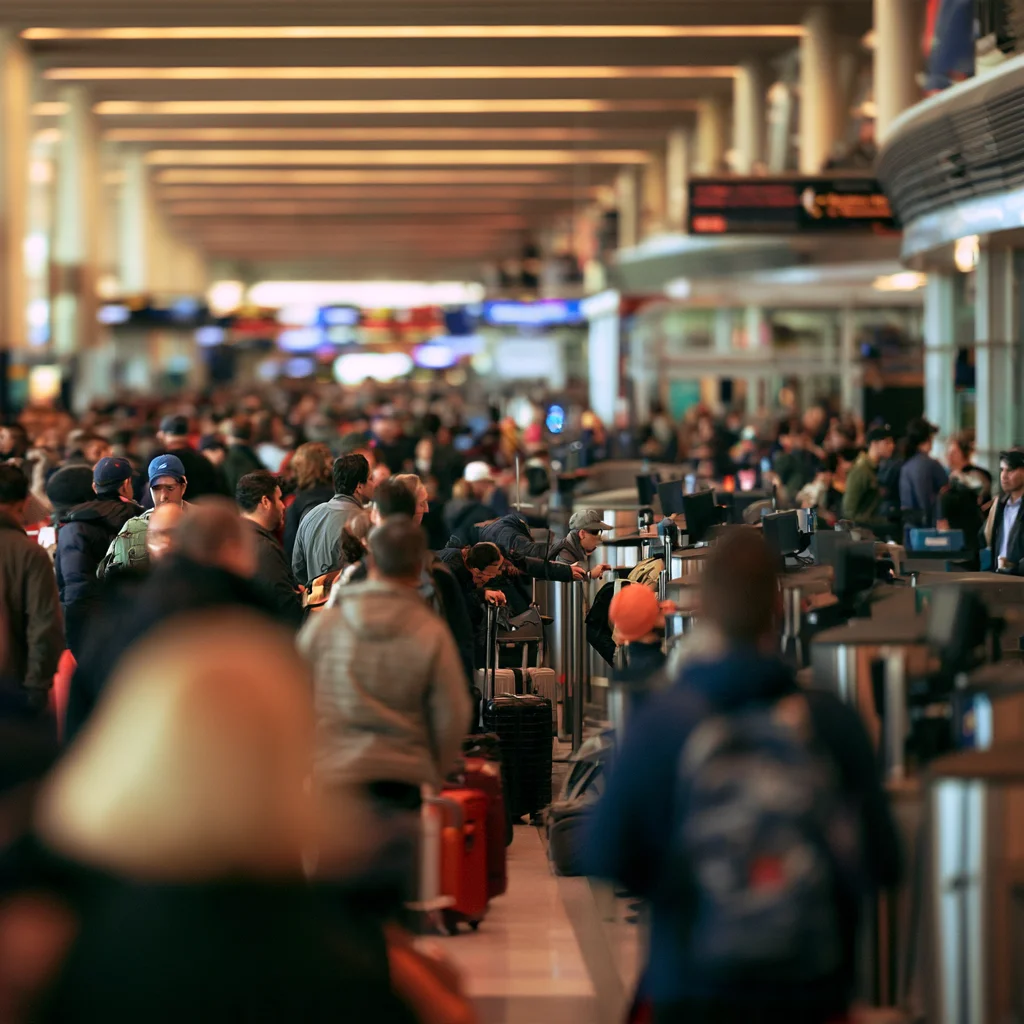
The departure boards at O’Hare lit up red at 3:30 PM ET on November 13. Gate agents grabbed their phones. Passengers watched flights blink from “On Time” to “Delayed” to “Canceled” across a row of screens. Within minutes, the story was identical at LaGuardia, LAX, and Dallas/Fort Worth: the FAA had issued a nationwide ground stop, halting every departing flight in the country.
For the tens of thousands of travelers caught mid-journey that Friday, it was chaos. Hotels near major airports booked up within hours. Customer service lines stretched to multi-hour waits. The FAA lifted the stop at 8:15 PM the same evening - but the cascade of cancellations and rebookings rippled through the weekend and beyond.
Now Thanksgiving is days away. Airlines for America projects nearly 29 million airline passengers will fly between November 20 and November 30. If you are one of them, the events of November 13 are worth your full attention - not to alarm you, but because knowing what happened, why it happened, and what you can do about it is exactly the kind of preparation that separates a frustrating trip from a ruined one.
What Happened on November 13
The FAA’s official investigation found that legacy equipment in its air traffic control network became unstable when data began flooding the FAA Flight Technologies and Innovations (FTI) network at an extraordinary rate - approximately 1,000 connection attempts every four to five seconds. That surge created instability with aircraft communications and radar feeds across the National Airspace System.
The disruption traced back to two locations: a radar site in Amarillo, Texas, and a radio communications site in El Dorado, Arkansas. L3 Harris, the FAA’s contracted network service provider, had been doing maintenance work at the El Dorado site, including deploying a new router. When network irregularities spiked, L3 Harris engineers blocked both locations and disabled the broadcasting function on new routers across the network, which stabilized the system.
The FAA issued the ground stop at approximately 3:54 PM ET and lifted it at 8:15 PM - a window of roughly four and a half hours. But “lifted” does not mean “recovered.” As the FAA’s own post-incident statement noted, returning to normal operations would be “slow and steady.”
The Scale of What Happened
By the end of November 13, airlines had canceled approximately 12,462 flights, with 9,082 of those cancellations coming from major carriers. Those are the figures the FAA released in its own post-incident Q&A - not a media estimate, not a rumor. Add in delays and the ripple effects of thousands of misconnected passengers, repositioned aircraft, and stranded crews, and the total disruption ran well past 11,500 flights across the following days.
For context: 31 percent of all scheduled US domestic flights did not depart on November 13. If you had a flight that day, your odds of arriving on time were roughly two in three - at best.
The cascading nature of these events is easy to underestimate. A canceled morning flight in Atlanta does not just affect Atlanta passengers. It means the aircraft scheduled to depart Atlanta for Minneapolis that afternoon is sitting in Atlanta. The crew planned for Minneapolis is now stranded. The gate at Minneapolis is waiting. Every flight in that chain slides backward.
Why This Matters Right Now
Thanksgiving is the busiest travel stretch of the American year. This November, Airlines for America is forecasting nearly 29 million passengers on US airlines between November 20 and November 30, with the heaviest traffic expected on Saturday November 29 and Sunday November 30. The industry is adding approximately 38,000 more seats per day compared to 2025 to meet demand.
That volume means any disruption - weather, another technical failure, an air traffic control staffing crunch - affects a staggering number of travelers at once. The November 13 ground stop happened on a relatively ordinary Friday. The same failure during the Wednesday before Thanksgiving would affect millions of travelers with far fewer options for rebooking, since every alternative flight would already be close to sold out.
The FAA says the system is stable. L3 Harris resolved the router issue. That is reassuring. What is also true is that this was not the first time aging US aviation infrastructure has caused cascading disruption, and the holiday travel window is not the moment to assume everything will run smoothly.
What to Do Before You Fly
You cannot prevent an FAA ground stop. What you can do is give yourself as many options as possible if one - or any other disruption - happens during the holidays.
Book the first flight of the day. Morning departures are statistically the least likely to suffer cascading delays. The aircraft is already at the gate from the night before, and there is no queue of late-arriving planes from other cities backing up the system.
Choose nonstop over connections wherever you can. A single canceled connecting leg turns a straightforward journey into an overnight stay you did not plan. If nonstop costs a bit more, the difference is often less than the cost of a last-minute hotel room at Chicago Midway.
Download your airline’s app and turn on notifications. Gate changes, cancellation alerts, and auto-rebook offers all come through the app before they reach the departure board. Being among the first to rebook online often means beating the line at the gate by an hour.
Bookmark the FAA’s National Airspace System Status page. The URL is nasstatus.faa.gov. It shows real-time ground stops, delays, and traffic advisories for every major US hub. Check it in the two hours before your flight leaves. If your departure airport is flagging red, you can call the airline sooner than the person who discovers the problem at the gate.
Know your rights. Under US Department of Transportation rules, if an airline cancels your flight for any reason, you are entitled to a full cash refund - not a voucher, not miles, but money back to your original payment method. Many carriers have also adopted stronger customer service commitments, including meal vouchers and hotel accommodations for controllable delays.
If Your Flight Gets Canceled
The first thing most people do is stand in line at the gate desk. During a mass disruption, that is usually the wrong move. While you are standing in line, thousands of other passengers are rebooking online. Try this sequence instead:
- Open the airline app immediately. Many carriers will proactively move you to the next available flight. Accept or modify from your phone before the line at the desk even forms.
- Call the airline’s international booking line if the domestic number has a long hold. These numbers are often far less congested during domestic disruptions.
- Book a hotel on the app before you leave the gate area. Airport hotels sell out within an hour of a major disruption. Keep the receipt - if you have travel insurance with trip delay coverage, that hotel stay may be reimbursable.
- Ask about alternative routings. Sometimes flying through a different hub - Chicago to Denver to Los Angeles instead of Chicago to Los Angeles direct - gets you home when the direct flight is fully sold out for days.
- Get written confirmation of the cancellation. If you plan to file a travel insurance claim, you need documentation: the written cancellation notice, your entitlement to a refund, and any accommodation the airline is offering.
Does Travel Insurance Cover a Ground Stop?
Broadly, yes - though the details depend on your specific policy.
Trip delay coverage typically activates when your departure is delayed past a specified threshold - often six hours, sometimes three hours on more comprehensive plans. During the November 13 disruption, the official ground stop lasted about four and a half hours. For many passengers, the downstream delays stretched through the night and into the weekend, well past any standard trip delay trigger.
Trip interruption coverage applies if the cancellation disrupts a trip already underway, covering additional transportation costs to get you to your destination.
One thing most standard travel insurance does not cover: missing a flight because you arrived at the airport late, even if you arrived late due to traffic caused by thousands of other stranded travelers. The delay has to be on the carrier or a qualifying external event - which an FAA ground stop is.
Worth noting: most travel insurance policies do not require the disruption to be your specific airline’s fault. A system-wide FAA ground stop qualifies as a covered external event regardless of which carrier you booked.
If you are traveling over Thanksgiving and do not yet have coverage, there is still time. Travel insurance can generally be purchased right up to the day of departure. For a comparison of plans and what different levels of coverage include, see Sitata’s travel insurance overview.
Practical Tips for the Holiday Rush
A few things that consistently make a difference when holiday travel goes sideways:
Pack essentials in your carry-on. Medications, a change of clothes, your laptop charger - anything you need to function. Checked bags do not always follow you to a rebooked flight.
Research backup accommodation for your layover city in advance. You will almost certainly not need it. But if a disruption strands you in Denver or Charlotte, having a shortlist of nearby hotels ready on your phone takes 90 seconds instead of 20 minutes of frantic searching at 11 PM.
Carry snacks and a full water bottle (after security). Airport food options get stretched thin during mass disruptions. Standing in a line at a terminal restaurant for 45 minutes when you should be watching your gate is not a situation you want to be in.
Tell someone your itinerary. A family member or friend who knows your routing can help monitor for disruptions and reach you if something goes wrong before you notice it yourself.
Stay calm at the gate. Airline staff are not causing the problem, and aggressive passengers get moved to the back of the rebook queue at the discretion of agents who have a great deal of discretion.
The Bottom Line
The November 13 FAA ground stop was a technical failure caused by aging infrastructure and a maintenance operation that cascaded in an unexpected direction. The FAA has stabilized the network, and L3 Harris resolved the routing issue.
What is also true is that the United States aviation system handles nearly 3 million passengers per day during Thanksgiving week, runs partly on equipment that is decades past its intended lifespan, and has experienced multiple systemwide disruptions in recent years. Building a small amount of resilience into your holiday travel plan - travel insurance, early flights, nonstop itineraries, backup accommodation options - costs relatively little against the alternative.
If your holiday travel plans extend beyond US domestic routes, Sitata’s app delivers real-time alerts for disruptions, travel advisories, and health updates at your destination. Whatever happens between now and December, you will not be the last to know.