
Saudi Arabia Travel Alert: Houthi Strikes and What to Do Now
Emergency sirens sounded across Riyadh on the evening of September 19, 2026. Residents reported hearing loud explosions and seeing black smoke rising near King Khalid International Airport. A Houthi drone and missile barrage had struck a fuel depot at the airport complex, triggering fires visible for kilometers. Within hours, FlightRadar24 rated conditions at Saudi Arabia’s busiest airport a MaxIndex 5.0 - the highest classification, meaning major problems with long delays and several cancelled flights.
By September 20, most of the disruption at Riyadh’s airport had eased. But the security situation around it had not. That same day, the US State Department issued an updated travel alert urging Americans to reconsider travel to Saudi Arabia and to be vigilant across the broader Middle East as Houthi missile and drone activity continues to escalate.
If you have flights through Riyadh, a business trip to the Gulf, a connecting transit through Dubai or Doha, or plans anywhere in the region, here is what you need to know right now.
What Happened at Riyadh’s Airport on September 19
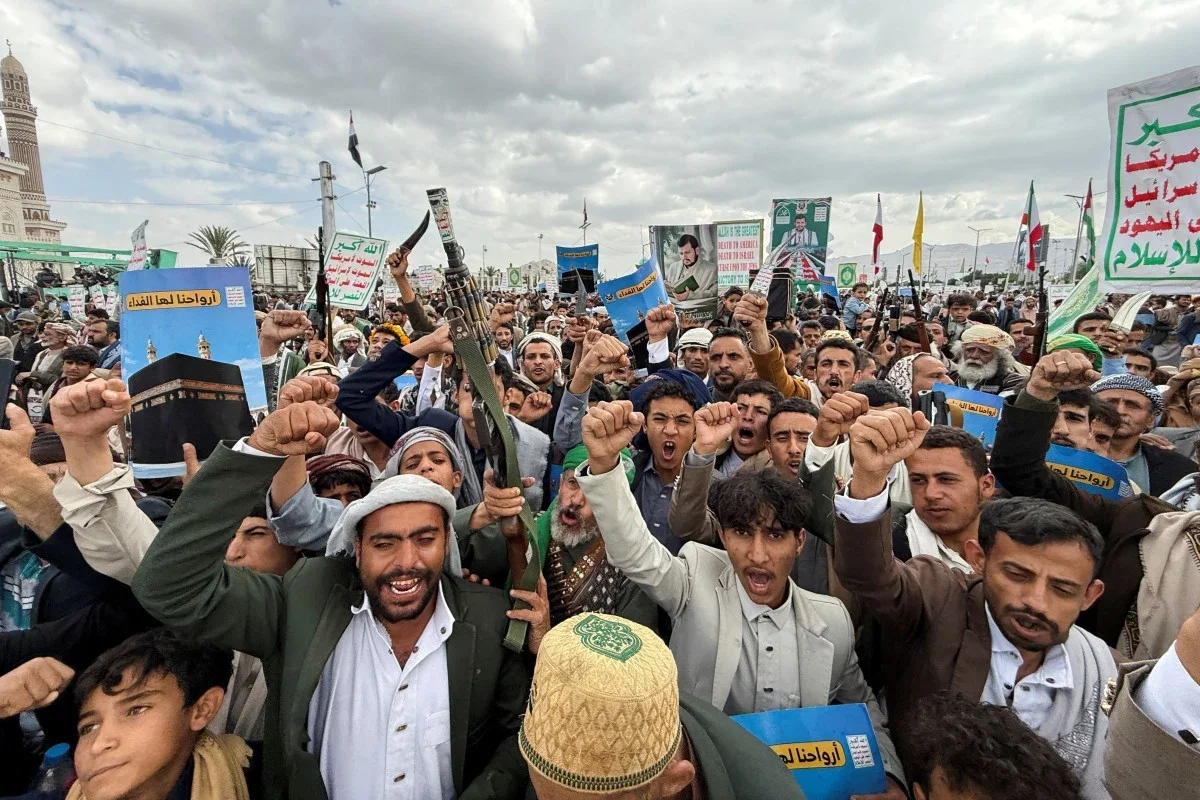
The Houthis - the Iran-aligned armed group that controls much of northern Yemen - claimed responsibility for the September 19 attack. They said they targeted Riyadh with a combination of ballistic missiles and drones. Saudi authorities confirmed intercepting a ballistic missile. What is not in dispute: a fuel storage depot near King Khalid International Airport (RUH) was struck, sparking a large fire that sent thick black smoke over the airport perimeter.
The New York Times described the attack as “a significant escalation.” Previous Houthi strikes in this conflict cycle had largely targeted infrastructure in southern Saudi Arabia, near the Yemen border. Reaching Riyadh - the capital, home to more than seven million people and one of the busiest aviation hubs in the Middle East - is a different kind of statement.
Saudia, flynas, and flyadeal eventually resumed normal operations, and the airport was largely functional again by September 20. But passengers caught in the September 19 disruption faced hours of uncertainty, scrambled rebookings, and in some cases overnight stays in Riyadh waiting for rescheduled departures.
The US State Department Warning
On September 20, the US State Department reaffirmed its Level 3 advisory for Saudi Arabia - Reconsider Travel - and issued fresh security alerts through US embassies across the region. Those alerts went directly to American nationals registered through the Smart Traveler Enrollment Program (STEP).
The core concern is not that tourist sites or business districts are under imminent threat. It is that the pace of Houthi missile and drone activity has increased enough that the situation can change rapidly and without warning. Travelers caught in a significant escalation could face last-minute flight cancellations, sudden airspace closures, or emergency conditions in a region where US consular assistance can be stretched thin.
The current warning spans a broad swath of the Middle East, with the countries most relevant to travelers being Saudi Arabia, Yemen, Oman, the United Arab Emirates, Qatar, Bahrain, Kuwait, Iraq, Jordan, and Iran. Each has a different threat profile. Yemen is Level 4 - Do Not Travel, and has been for years. Saudi Arabia sits at Level 3. The major Gulf transit hubs - Dubai, Doha, Abu Dhabi, Manama - are not directly under attack, but they sit close enough to the active conflict zone that regional escalation can affect their flight routing and operating conditions.
The UK Foreign, Commonwealth and Development Office (FCDO) has not issued a blanket recommendation against travel to Saudi Arabia, but does advise travelers to avoid the Yemen border area - which includes the vicinities of Jizan, Najran, and Abha - and to remain alert to the possibility of attacks countrywide. Canada and Australia carry similar messaging: exercise a high degree of caution in Saudi Arabia and monitor conditions closely.
Which Saudi Airports Are Open Right Now
Not all Saudi airports face the same risk level.
Operating - confirm individual flights before travel:
- Riyadh, King Khalid International (RUH) - disruption has eased since September 19, but check your specific flight departure status the morning of travel
- Jeddah, King Abdulaziz International (JED) - operating; subject to flow measures and periodic delays from regional routing changes
- Dammam, King Fahd International (DMM) - operating
- Madinah, Prince Mohammad Bin Abdulaziz International (MED) - operating
Effectively closed or severely disrupted:
- Abha (AHB) - near the Yemen border; repeated Houthi alerts and short-notice disruptions
- Jizan (GIZ) - closed or operating with major restrictions
- Najran (EAM) - similar situation to Jizan
If your itinerary touches Abha, Jizan, or Najran for any reason, contact your airline directly. There is no tourism infrastructure in those cities worth the added risk right now, and there has not been for months.
The Wider Airspace Picture
One reason delays are showing up even at airports far from the fighting is that the overall Middle East airspace picture is severely constrained. Iran, Iraq, and Lebanon are currently no-fly zones at all altitudes. Kuwait is closed to overflights until at least October 2. All of that displaced traffic has to route somewhere, and a significant portion of it is pushing through Saudi corridors.
EASA - the European Union Aviation Safety Agency - issued an Information Note for the Jeddah Flight Information Region on August 31, valid through September 30. It does not ban flights, but it requires airlines to formally assess and document regional risk before operating in the area. A separate bulletin (CZIB-2026-07R2) effectively keeps aircraft off the waters of the Persian Gulf and the Gulf of Oman west of 58 degrees East except during landings and takeoffs, which reshapes flight paths over every major Gulf hub.
The practical result: flights transiting the region are often taking longer routes, changing gates or departure times with very little notice, and occasionally rerouting mid-schedule. If your flight connects through Riyadh, Jeddah, or any Gulf hub, build in extra buffer time and check your airline’s app the morning of travel - not the night before.
Transiting Through Dubai, Doha, or Abu Dhabi
The Gulf hub airports in the UAE, Qatar, and Bahrain are not under direct attack. Emirates, Qatar Airways, and Etihad are all operating normal schedules. For most transit passengers, a connection through Dubai (DXB) or Doha (DOH) continues to work as planned.
The risk for transit travelers is indirect: regional escalation can trigger last-minute airspace changes that cascade through connecting itineraries. A flight from London to Mumbai routed over the Gulf may face a diversion or delay if a new restriction opens up while it is airborne. This kind of disruption is hard to predict and fast-moving.
If you are connecting through a Gulf hub on the way to or from a destination elsewhere - particularly if your routing takes you over Saudi Arabia, the Red Sea, or the Gulf of Oman - check your airline’s status regularly in the days before departure and make sure you have adequate layover time to absorb a delay.
What to Do If You Have a Trip Planned
The honest reality is that Saudi Arabia is not in a state of general conflict. Riyadh, Jeddah, and Dammam function as normal cities for most travelers on most days. Business travel continues. Religious travelers can access Mecca and Madinah. The major Gulf transit hubs are operating.
But the risk of sudden escalation is real, and September 19 showed it can reach the capital directly. Here is what to do before you travel:
Check your airline’s status. Sign up for flight alerts from your carrier and verify departure status within 24 hours of travel. Conditions at Riyadh’s airport can change in hours.
Register with your government’s travel program. US travelers should use the State Department’s STEP program. UK travelers can register for FCDO Alerts. This ensures your embassy can reach you quickly in an emergency.
Avoid southern Saudi Arabia entirely. There is no reason to be within 100 kilometers of the Yemen border right now. If your itinerary originally included Abha or the Asir region, restructure it.
If you are already in Saudi Arabia, know where your nearest embassy or consulate is, keep your phone charged, and have a backup plan for getting to Riyadh or Jeddah airports quickly if your situation changes.
Consider timing. If your trip is discretionary - a vacation or a trip that can be rescheduled - the current Level 3 advisory warrants seriously reconsidering your timeline. If you need to travel for work or family reasons, go in with your eyes open and your insurance in order.
What Travel Insurance Actually Covers Here
This is where many travelers find out their policy does not do what they thought it would. Travel insurance can be genuinely useful in a situation like this - but the details matter.
Trip cancellation and interruption coverage may pay out if a government travel advisory is upgraded after you purchased your policy and you can demonstrate you are unable to travel safely. If the Level 3 advisory for Saudi Arabia was already in place when you bought your ticket and insurance - which it has been for some time - many standard policies will not cover a cancellation based solely on that advisory.
Flight delay and cancellation coverage can reimburse additional accommodation, meals, and rebooking costs when your flight is cancelled due to security conditions. This is often a separate benefit from trip cancellation, with its own limits and documentation requirements.
Medical and emergency evacuation coverage is the most important protection in a conflict-adjacent situation. If you need to be evacuated for any reason - medical emergency, security escalation, or both - medical airlift from Riyadh to a facility outside the region can easily exceed $100,000 USD without insurance. That cost alone makes comprehensive coverage worth checking before you board.
We previously covered the early phase of Houthi Red Sea disruptions in our post on Houthi attacks and the expanding Middle East conflict - but the situation in September 2026 has moved significantly since then. The threat has shifted from maritime disruption to direct strikes on Saudi territory, including the capital.
Read more about what travel insurance covers for your trip and make sure you understand your policy’s terms before departure - not after something goes wrong.
The Bottom Line
Saudi Arabia right now is a destination where the risk picture is elevated and moving. The September 19 Houthi strike on Riyadh was a genuine escalation - the first time in this conflict cycle that the capital’s airport infrastructure was directly struck. The US State Department’s Level 3 advisory and the broader regional alerts that followed are not bureaucratic caution. They reflect a real increase in risk.
That does not mean cancel every trip automatically. Major airports are running. Riyadh and Jeddah are functioning cities. Millions of people transit through the Gulf every week without incident.
What it does mean is that this is the wrong time to travel to or through Saudi Arabia without proper insurance coverage, without checking your specific flight status the day of travel, and without a clear plan if things escalate. Know what your policy covers. Know where your embassy is. And if the trip is optional, there is no shame in waiting a few weeks to see how the situation develops.
Sitata monitors travel disruptions and health alerts worldwide. Download the Sitata app to get real-time safety alerts and travel disruption notifications for wherever you are headed.